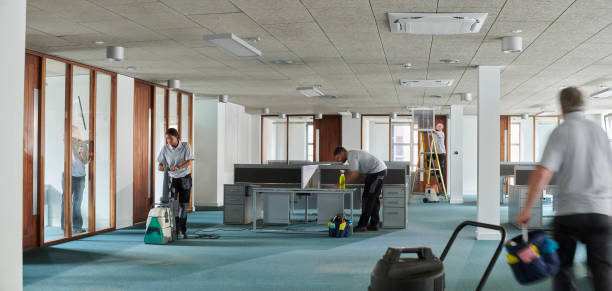
Most businesses treat Office Cleaning Sydney as a background task, something that happens quietly overnight and only gets noticed when it stops happening properly. That’s a reasonable way to think about it day to day, but it also means a lot of businesses underinvest in something that actually has a measurable effect on staff wellbeing, client perception, and even productivity.
Walk into two similar offices, one with overflowing bins, dusty desks, and a kitchen that smells faintly of last week’s lunch, and another that’s spotless, and you’ll form very different impressions of both businesses within seconds, often without consciously realising why. Employees form the same impressions too, just over a longer timeframe, and it shapes how they feel about coming into work every day.
The Productivity Connection
There’s a reasonable body of workplace research suggesting that cluttered, dirty environments contribute to lower concentration and higher stress among employees. It makes intuitive sense: a messy desk pulls attention away from actual work, and a genuinely unclean space, dusty surfaces, grimy kitchen benches, overflowing bins, adds a low-level irritation that builds up over a working week.
On the flip side, a clean, well-organised office removes one more thing for staff to think about. It’s a small factor on any given day, but across months and years, it contributes meaningfully to how pleasant and functional a workplace feels to the people spending eight hours a day inside it.
Health, Sick Days, and the Cost of Cutting Corners
Offices are shared environments, and shared environments spread illness efficiently. Shared keyboards, meeting room tables, kitchen appliances, and door handles all become touchpoints for whatever cold or flu happens to be going around the office at any given time. Regular disinfection of these high-touch areas, not just general tidying, plays a real role in reducing how quickly illness spreads through a workplace.
Businesses that treat cleaning as a genuine investment rather than a cost to be minimised often see this reflected in fewer sick days across the team, which, over a year, can offset a meaningful portion of what they’re spending on a proper cleaning contract in the first place.
What a Proper Office Cleaning Routine Actually Covers
A solid cleaning arrangement usually splits into daily, weekly, and periodic tasks. Daily work covers the basics: bins, kitchens, bathrooms, and general surface wiping. Weekly attention might extend to more detailed vacuuming, glass partition cleaning, and deeper kitchen sanitising. Periodic deep cleans, carpet steam cleaning, upholstery cleaning, and window washing, round out the routine without needing to happen every single week.
Businesses working with an established provider of Office Cleaning Sydney services generally find this layered approach works better than a flat daily clean alone, since it addresses both the immediate visible mess and the slower buildup of dirt and grime that daily cleaning alone tends to miss.
Client Impressions Matter More Than People Admit
For businesses that regularly host clients, whether that’s a law firm, an accounting practice, or a creative agency, the state of the office plays a real role in how professional the business appears. Meeting rooms with dusty blinds or a reception area with a grubby carpet undercut even the most polished pitch or presentation a team can put together.
It’s a detail that’s easy to overlook internally, since staff walk past the same spots every day and stop noticing wear and grime that’s obvious to a first-time visitor. A fresh set of eyes, which is essentially what a professional cleaning team provides, tends to catch these details before a client does.
Flexible Cleaning for Flexible Workplaces
Since hybrid work became the norm across much of Sydney’s corporate sector, office cleaning needs have shifted too. Fewer businesses need a full daily clean when half the team is working from home two or three days a week, and many are moving toward more flexible arrangements, adjusted cleaning frequency based on actual occupancy, rather than paying for a service built around a full five-day office presence that no longer reflects reality.
A good cleaning provider will work with businesses to adjust schedules as workplace patterns change, rather than locking clients into a rigid contract that doesn’t match how the office is actually being used.
Final Thoughts
Office cleaning is easy to treat as an afterthought, but its impact reaches further than most businesses give it credit for, touching staff wellbeing, sick leave, and the impression clients form the moment they walk through the door. Getting the basics right, consistently, is a small investment that pays off in ways that aren’t always obvious but are felt by everyone who spends time in the space.